

This is part of our Diabetes Stories series, where people living with diabetes share their personal journeys, challenges, and insights.
Hello! Who are you? And tell us a little bit more about your diabetes.
Hey everyone! My name is David Jarvis. I’m 43 years old, and currently living in Aberdeenshire, Scotland. I’ve been living with Type 1 diabetes for 2 years.I’m a multi-award winner, keynote & motivational speaker, Invictus Games gold medalist, British Army veteran, community champion, and proud Type 1 diabetic.
I was diagnosed with Type 1 diabetes in May 2023 at the age of 41, after a sudden and severe episode of diabetic ketoacidosis (DKA). In just two weeks, I lost 26% of my body weight, and it was clear something was seriously wrong.
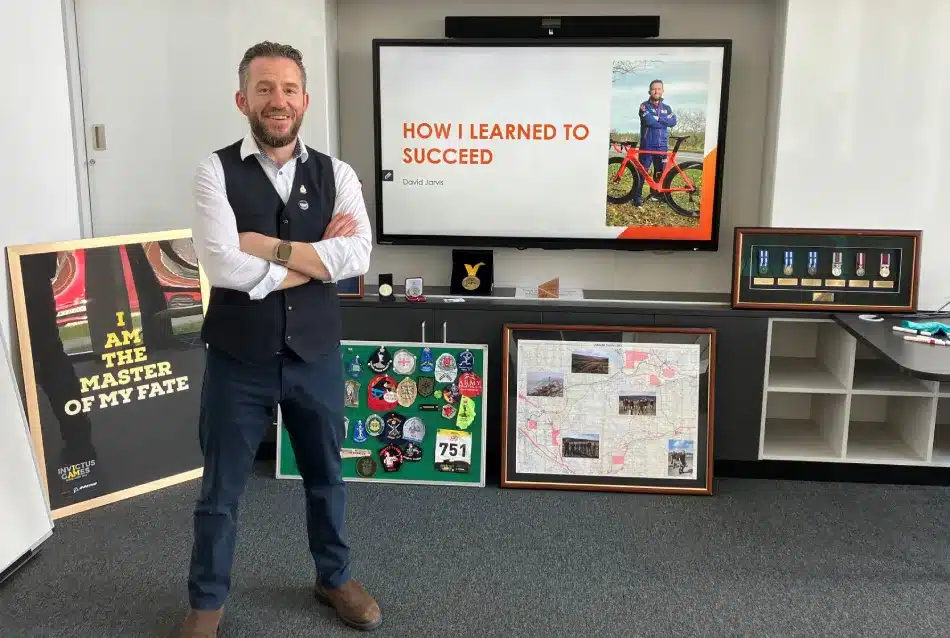
The diagnosis came only three months before I was due to compete in the Invictus Games. Doctors and the Team UK manager advised me to step back and focus on recovery. It was understandable—my HbA1c was around 150, and I was in rough condition. But I made a different choice. I decided to continue training and use the Invictus Games as a goal to channel my efforts and energy.
Learning to live with, train with, and compete with Type 1 diabetes was one of the hardest challenges I’ve ever faced. At its worst, I was pricking my fingers and injecting insulin more than 40 times a day. I made a lot of mistakes—eating too much or too little, overcorrecting or underdosing insulin, stopping workouts mid-session because I got it wrong. It was a cycle of constant trial and error.
What made it even harder was the loneliness. No one in my circle—family, friends, or teammates—had any experience with Type 1 diabetes. I was navigating it all on my own, and the combination of repeated failures and isolation made the mental toll incredibly tough.
But through it all, I stayed committed. I used the diagnosis as fuel to push forward—not just for the Invictus Games, but to better understand my body and mind, and to inspire others facing unexpected challenges.
“ I know it can feel overwhelming at first, but you don’t have to figure everything out all at once.”
Your treatment
How do you treat your diabetes, did a lot change over the past years and are you able to manage it well?
I manage my diabetes largely on my own. I receive my medication through the NHS, and while I do have a diabetes specialist who checks in occasionally, they mostly just ask about my methods—apparently they’re a bit unconventional. I don’t have many Type 1s in my life to compare notes with, so I’ve had to figure out what works for me through trial and error. Interestingly, I’ve been asked to speak at a diabetes conference next year, so maybe I’ll finally get to see how my approach compares.
As for treatment, it depends on the season. In the off-season, diet is my primary method of control. When I’m in training or competition season, I shift to using insulin injections more consistently, with diet playing a secondary role. I use Novorapid and Levemir as my main insulin types. I also take painkillers for other injuries I’ve sustained—especially from my time in the army.

One of the most essential tools I use is my Dexcom one+ CGM. It allows me to manage things proactively—I check it every 20 to 30 minutes and have early alerts set for 4.5 mmol and 8.5 mmol. I still finger prick at least once daily for calibration, and also anytime an alarm goes off, or I’m about to eat carbs or take a correction dose.
I was only diagnosed in 2023, so I haven’t had diabetes for very long. That said, I’d already been medically discharged from the army about 18 months earlier due to various injuries, so I was no stranger to life-altering changes. Still, Type 1 has been the hardest adjustment. Being part of Team UK and preparing for the Invictus Games gave me something to focus on, and that made a huge difference in how I handled the transition.
As for how well I manage it—there’s always room for improvement, but I typically stay in range 90 to 95% of the time. My doctor tells me that’s impressive, but again, I don’t really have other type 1s to compare with. I just keep doing my best to stay consistent and proactive.
Can you recognize the symptoms of a low/high blood sugar? Do you test often and can you tell a bit more about your experiences with low blood sugar?
I can usually recognize the symptoms, though not always right away. With low blood sugar, I tend to feel hyper or overly energized at first—almost like a sudden burst of adrenaline. Then the more classic symptoms kick in: I start seeing stars, sweating heavily, and I know I need to act quickly.
Highs feel very different. I get lethargic, moody, and mentally foggy—like my head is filled with cotton. My physical performance also drops; endurance and strength take a serious hit when my levels are high.
I keep a close eye on my glucose levels with my CGM, which I check every 20–30 minutes. It’s a huge help in catching lows early. When I do go low, I usually treat it with sports gels or isotonic energy gels—they’re fast and effective. That said, I do have a weakness for Reese’s Pieces, and they sometimes find their way into my hypo treatments.
I’ve never fainted from a hypo, but there have been a couple of close calls where I had to sit down and take a moment to recover. So far, I’ve managed to catch them before things got too serious.
Food and diet
How does your diabetes affect your eating and do you find being on a diet restrictive?
I don’t follow a strict diet plan, and I don’t find my eating habits restrictive at all. I typically eat simple foods and adjust based on my training schedule and blood glucose levels.
Most days, I skip breakfast and eat when it suits my routine, with the occasional cheat day thrown in. I vary both my food and insulin doses accordingly—there’s no rigid schedule, aside from my long-acting insulin, which I take consistently at 05:30 and 17:30 every day. The dose might change, but the timing stays the same.
When I’m doing a lot of training or physical activity, I’ll often have snacks like peanut butter sandwiches or fruit between meals to keep my energy levels up. I also drink a lot of water—anywhere from 3 to 6 liters per day depending on the weather and how intense my training is.

I haven’t had anyone question what I eat negatively. Occasionally, people ask about my diet or how I manage my condition, but those questions tend to come from a genuine place of curiosity. I have a strong background in fitness coaching and nutrition, so I actually enjoy talking about it and helping people understand it better.
Do you believe that a plant based diet can improve diabetes? Did you ever experiment with this?
I’ve never gone fully vegan, but I do believe that including plenty of fruit and vegetables is essential for overall health and diabetes management. While I haven’t followed a strict plant-based diet, I recognize the benefits of incorporating more whole, plant-based foods into my meals.
Do you have a hard time eating out in a restaurant? And what are you thoughts on making this easier?
I don’t usually find eating out too difficult. I try not to overthink it when it comes to estimating carbs and adjusting my insulin—sometimes you just have to make your best guess and roll with it. That said, it would definitely help if restaurants provided more detailed information on carb content and how long certain foods take to impact blood sugar levels. Just having a general idea would make decision-making a lot easier.
I’m a fan of steak houses, Indian restaurants, Italian food, and seafood spots. I don’t eat out all that often, but when I do, I enjoy trying new things. My go-to comfort food, though? A good old-fashioned flame-grilled cheeseburger off the BBQ—and if we’re talking snacks, I can’t resist Reese’s Pieces!
I do think our broader approach to food as a society could use some rethinking—especially when it comes to how meals are structured and timed. It’s not necessarily a personal challenge for me, but from a health perspective, there’s room for improvement in the way we’re encouraged to eat.
“The hardest part of living with diabetes is definitely the mental side.”
Exercise and work
Does your diabetes restrict you from exercise or your daily job?
Not at all. I stay very active and make exercise a core part of my lifestyle. I regularly cycle, swim, lift weights, and train for events like Hyrox and circuit training. Managing diabetes around intense physical activity does require attention and adjustment, but it hasn’t held me back.

Professionally, I wear a few hats—I’m a solution architect, project manager, fitness & life coach, and a motivational speaker. My roles are demanding, but I’ve learned to adapt and manage my condition alongside them.
Final
Do you have any positive or negative effects because of your diabetes?
The hardest part of living with diabetes is definitely the mental side. It’s a constant learning curve, and I’ve had to teach myself to embrace the mistakes and not overthink every misstep. There’s a lot of trial and error involved, and accepting that has been a big part of my journey.
On the lighter side, one unexpected perk is being able to call chocolate “medication”! It’s a small silver lining that always makes me smile.
To manage my diabetes more effectively, I look at patterns in my diet over a 3–4 day period. I’ve noticed that what I eat can impact my insulin needs beyond just the current day, so I try to stay aware of how foods affect me over time.
So far, I haven’t experienced any additional problems related to my diabetes.
What is the best advice that you can give to non-diabetics, new diagnosed diabetics and diabetics?
For non-diabetics, I’d say this: we can’t just wing it when it comes to food or medication. Every decision we make has consequences, and managing diabetes requires constant thought, adjustment, and discipline—even when it looks effortless from the outside.
To anyone newly diagnosed: don’t panic. I know it can feel overwhelming at first, but you don’t have to figure everything out all at once. Just start with the first item on your list and take it step by step. It gets easier with time, patience, and persistence.
And for those already living with diabetes: don’t listen to people who say, “there’s no rhyme or reason” to how your body reacts. There is a reason—your body is always trying to tell you something. Pay attention, stay curious, and keep learning from it. Understanding your own patterns is one of the most powerful tools you have.
What would you ask the other diabetics?
Is your condition stopping you to do anything and why.
Share your thoughts in the comments—I can’t wait to hear from you!
Ready to share your story with the world?
At Diabetic Me, we dive into the real-life stories of people living with diabetes, uncovering the challenges, triumphs, and everything in between. Through these powerful stories, we aim to shed light on what it truly means to live with diabetes, offering understanding, inspiration, and support.
If this story resonated with you, why not stay connected? Join our mailing list to discover more inspiring journeys.
Have a story of your own to share? We’d love to hear it! Your experience could be the next one to inspire others. Share your story.

wow, just read about how you got diagnosed with Type 1 diabetes and still managed to do all these amazing things, like winning at the Invictus Games and speaking out to motivate others. that’s really something. im kinda in sports too and i know it ain’t easy with all the training and stuff, but dealing with a health issue on top of that? that’s just wow. gotta say, it makes my struggles seem small in comparison. Props to you, Ely Fornoville, for not letting it hold you back.
Does anyone know what kind of diet or nutrition plan Ely follows to manage his diabetes and still stay competitive? Really curious how he balances that with his training.
Ely Fornoville’s story is truly inspiring, showcasing the strength of the human spirit. His journey offers valuable insights into resilience and determination.